

Powering Chicago’s Guide to Safe Holiday Light Installation
- Posted: December 16, 2025
- better careers, better communities, better construction, electrical safety, holiday lighting, how to install holiday lights, how to install holiday lights safely, IBEW Local 134, McWilliams Electric, qualified electrical contractor, safe holiday decorations
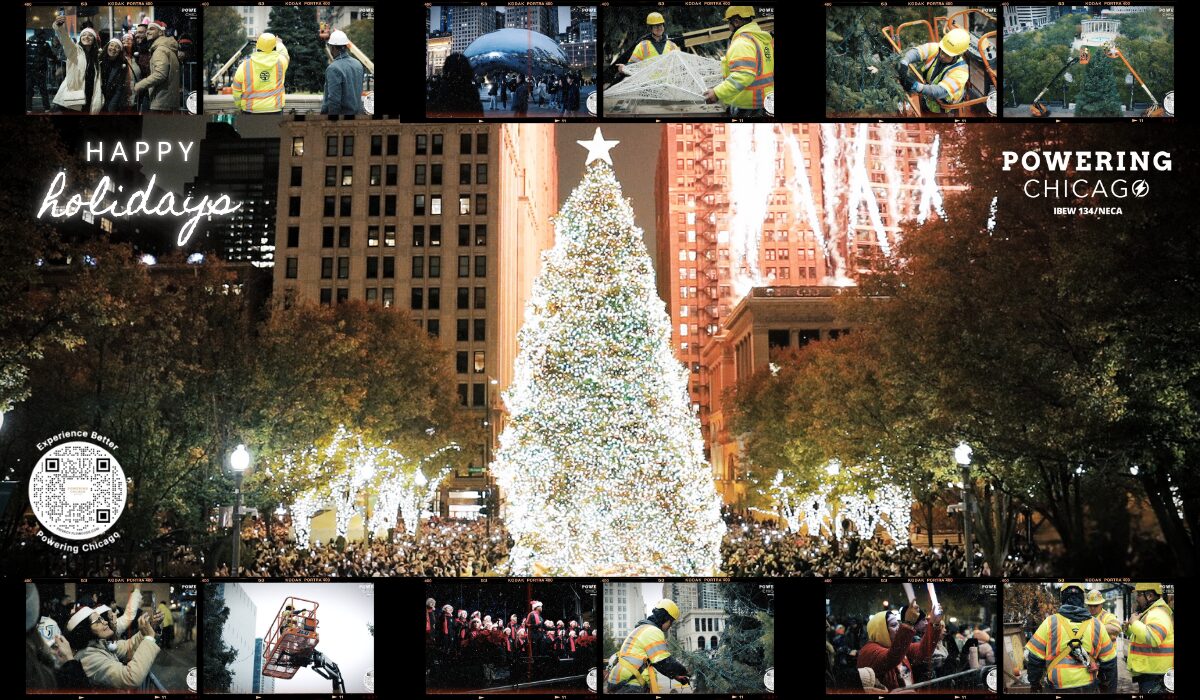
The holiday season is upon us, and homes across Chicago are beginning to sparkle with festive lights. As you hang your outdoor decorations, it’s essential to prioritize electrical safety. Data shows that electrical issues, including problems with distribution and lighting equipment, contribute to 45% of Christmas tree fires in homes. To help you safely deck your halls, Powering Chicago member and McWilliams Electric Vice President of Field Operations & Safety, Jerry McGlynn, shares expert tips to ensure your holiday displays are not only beautiful but also secure.
1. Inspect Lights Carefully
Before hanging holiday lights, thoroughly inspect each strand for any cracked sockets, damaged cords, loose connections, or broken bulbs. Even a small crack can expose live wires, while aged and brittle cords may cause electrical shorts. According to the National Fire Protection Association (NFPA), faulty decorative lights are a contributing factor in 17% of home fire incidents during the holidays. If you notice any damaged lights, dispose of them responsibly. Repairing defective lights is a job for a professional — not a DIY project.
2. Use Clips, Not Staples or Nails
When securing holiday lights, always use plastic hooks, clips, or zip ties instead of staples or nails. Using staples or nails can damage the insulation, exposing wires and creating a fire hazard. Also, be mindful that cords and plugs are involved in 7% of Christmas tree fires. Position your cords in low-traffic areas to minimize the risk of accidental tugs or damage.
3. Keep Lights Away from Heat Sources
When setting up outdoor lights, avoid placing them near roof vents or areas where exterior walls get warm. Heat can weaken cords over time, making them more prone to cracking. Fasten your lights securely and ensure that cords aren’t touching hot surfaces like window frames or active light bulbs. Overheated cords can release harmful fumes, and melted plastic poses a fire hazard.
4. Unplug Before Making Adjustments
Always unplug light strands before installing, adjusting, or removing them. Don’t rely on turning off the switch — physically unplugging the lights ensures you avoid accidental shocks or damage to the lights. Electrical malfunctions or failures are a factor in nearly 30% of Christmas tree fires, making this a crucial step in protecting your home and family.
5. Use Heavy-Duty Outdoor Extension Cords
When using extension cords for outdoor lighting, choose cords rated for outdoor use. These cords are designed to withstand weather and heavy use. Look for cords marked SPT-3 or cords with a 12 or 14-gauge wire designed for outdoor conditions. Avoid using indoor extension cords outside, as they can overheat and create fire risks. Always inspect cords for damage, including cracks or fraying, and ensure that no wires are exposed.
6. Don’t Overload Extension Cords
Each extension cord has an amperage rating that should not be exceeded. Overloading cords by plugging in too many lights can lead to overheating, melting, and fire hazards. For example, a standard outdoor extension cord can safely support about four C7 light strands. If you plan to use more, use additional cords to distribute the load.
Tip: Look for extension cords with built-in plugs along the cord for better load distribution and safer connections.
7. Elevate Outdoor Cords
If you’re running extension cords outside, make sure they’re elevated off the ground and not resting in snow or puddles. Moisture exposure can lead to short circuits, posing shock hazards or even fires. Keep cords out of standing water and winter precipitation by securing them with clips along the length of the cord.
8. Use a Ladder for High Areas
When hanging lights on your roof or in high places, always use a sturdy ladder. Avoid hanging over the edge of your roof to prevent falls and injury. Check that your ladder is in good condition before climbing, and never use a ladder that appears damaged.
9. Consider Hiring a Licensed Electrician
If your holiday light display is large or complex, it’s a good idea to hire a qualified, licensed electrician. A professional can ensure the right wiring and gauge for your display, fuse connections properly, and use waterproof junction boxes to minimize risk. Always verify that the electrician is licensed, bonded, and insured. Use Powering Chicago’s Find A Contractor tool to locate trusted electricians in the Chicagoland area.
Celebrate Safely with Powering Chicago
As homes light up with festive cheer this season, let Powering Chicago’s safety tips guide your holiday decorating. By following these simple steps, you can enjoy a beautiful, stress-free holiday display while keeping your home and loved ones safe.
Happy holidays, and remember to light responsibly!
