

How Qualified Electrical Contractors Set the Standard During Construction Safety Week Chicago
- Posted: May 7, 2026
- Chicago Electrical Contractors, Electrical Construction Chicago, Electrical construction in Chicago, Electrical contractor safety training in Chicago, Find an electrical contractor, Jobsite safety, Qualified electrical contractors in Chicago
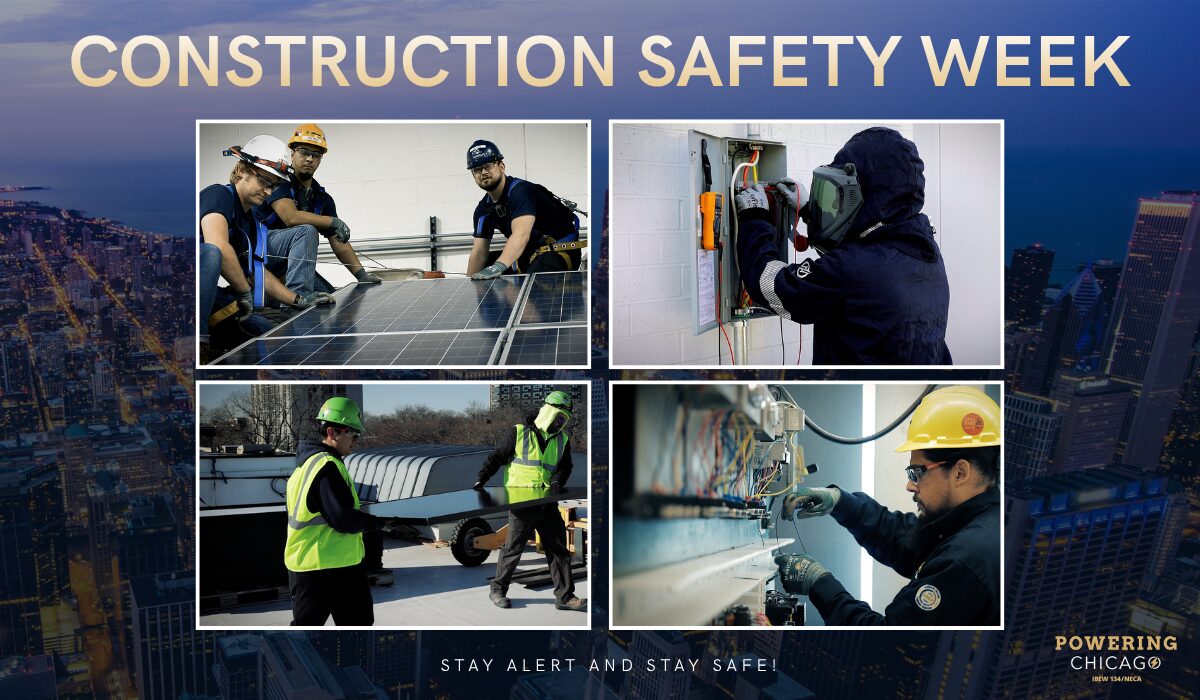
Construction Safety Week Chicago takes place May 4–8, 2026, bringing together contractors, project owners, and industry leaders to strengthen jobsite safety.
This year builds on the theme “All In Together,” reinforcing the progress made across the industry while advancing a more unified approach to safety. The focus centers on three core principles—Recognize, Respond, and Respect—creating a clear framework for identifying high-energy hazards, taking action to control risk, and reinforcing accountability across every phase of a project.
For Powering Chicago member contractors and the electricians they employ, these principles extend far beyond a single week. They reflect how work is planned, executed, and delivered every day across Chicago and Cook County.
Building a Culture of Safety Through Training and Experience
Safety performance is built through consistent training, hands-on experience, and a workforce prepared to recognize and respond to risk in real time.
Electrical apprentices through IBEW-NECA Technical Institute (IN-Tech) complete a five-year paid program that includes approximately 1,200 hours of classroom instruction and roughly 8,500 hours of combined training. This structured progression develops both the technical expertise and safety awareness required to operate in high-risk environments.
That training supports work in mission-critical settings where safety and reliability are essential, including:
- Data centers and communications infrastructure
- Healthcare facilities and emergency systems
- Transportation and public infrastructure
- Advanced manufacturing and energy systems
- And more
Safety is embedded throughout every stage of this training. Apprentices are taught electrical theory, Chicago Electrical Code compliance, and critical safety protocols such as arc flash prevention. Between 200 and 300 hours are dedicated to safety practices, including lockout/tagout procedures and hazard identification, ensuring electricians are prepared to prevent issues before work begins.
To maintain these standards, Powering Chicago members continue investing in ongoing training and continuing education. Through IN-Tech, journeyperson electricians regularly return to stay current with evolving technologies, updated safety practices, and industry requirements, reinforcing a culture of continuous safety.
Recognizing Risk Before It Becomes an Incident
A central focus of Construction Safety Week is improving hazard recognition, ensuring teams are equipped to identify risks early and take action before work begins.
Insights from the Construction Safety Research Alliance indicate that during typical pre-task planning, crews identify roughly 45% of potential hazards. When structured tools—such as energy-based risk models are introduced, recognition rates can improve by approximately 30%, strengthening awareness and decision-making across the jobsite.
Construction Safety Week is driving industry-wide alignment by encouraging the use of consistent indicators tied to serious injury and fatality risks. This shared approach helps teams more quickly recognize hazards, communicate clearly, and take action to reduce risk.
For qualified electrical contractors, this level of structure is already embedded into daily operations. Teams are trained to identify high-energy hazards—among the most serious risks on a jobsite—and apply a consistent framework to evaluate conditions before work begins.
Turning Planning Into Action
Identifying hazards is only the first step; how teams respond is what defines a strong safety program.
Powering Chicago member contractors apply structured planning methods, including the hierarchy of controls—a widely recognized safety framework that ranks hazard mitigation strategies from elimination to personal protective equipment— to eliminate or reduce risk before work begins. Whether through equipment selection or workflow adjustments, safety is addressed during planning, not after an issue arises.
This proactive approach leads to fewer disruptions, more reliable timelines, and greater consistency in project outcomes, starting with selecting a contractor who prioritizes safety from the outset.
Equally important is how teams maintain that standard throughout the project. Safety depends on a shared sense of responsibility across every role on the jobsite. For qualified electrical contractors, that responsibility is demonstrated through accountability. If conditions change, work pauses. Plans are reassessed. Adjustments are made before work continues.
For project stakeholders, this disciplined approach strengthens execution and builds confidence throughout the project lifecycle, ensuring safety evolves alongside the work while protecting both people and project outcomes.
Why It Matters for Your Projects
For municipality owners, facility managers, developers, and business leaders, safety directly impacts timelines, costs, and long-term performance.
Working with qualified electrical contractors means partnering with teams that:
- Prioritize risk identification and prevention
- Apply structured safety planning from the start
- Maintain consistent training and certification standards
- Deliver projects with fewer disruptions and greater reliability
Powering Chicago member contractors and the electricians they employ continue to advance this standard through proven training, experience, and safety practices across every phase of construction. Start with the right partner, use Powering Chicago’s Find a Contractor Tool to connect with a qualified electrical contractor.
